THE HARMONIC CONTINUITY
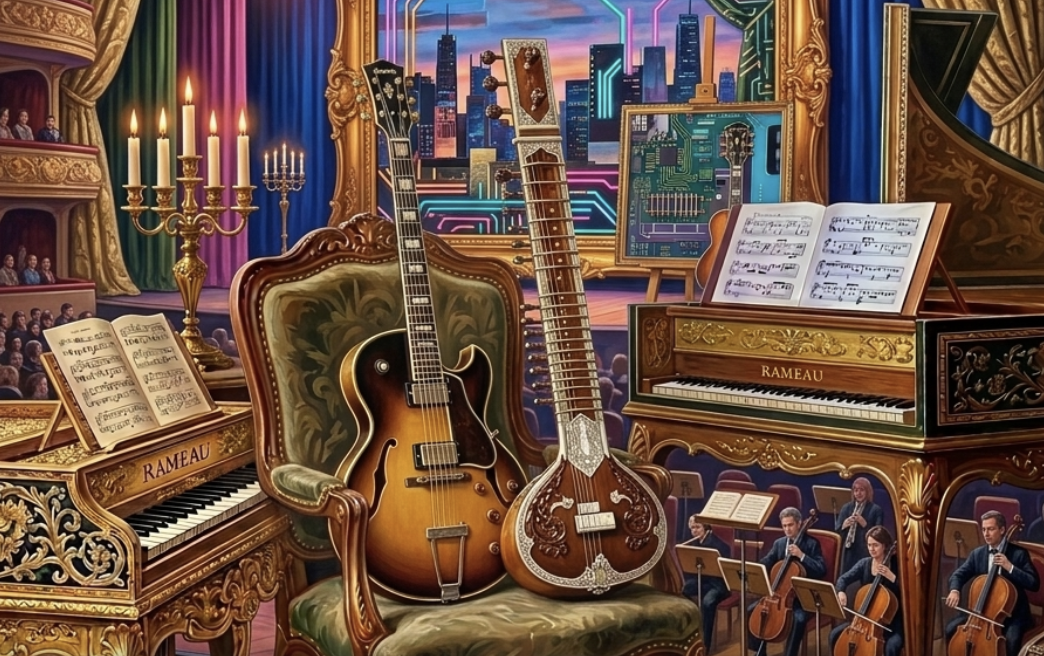
From Rameau’s Traité (1722) to Modern Fusion: The Receptor Theory of Universal Resonance
By: Nelson Jovian
I. INTRODUCTION: THE NATURAL SCIENCE OF SOUND
In 1722, Jean-Philippe Rameau published Traité de l'harmonie réduite à ses principes naturels, shifting music theory from mere numbers to a foundation in acoustical science. Rameau posited that music is a discovery of natural principles already in existence. This dissertation explores the bridge between Rameau’s foundations, the spiritual improvisations of Indian Classical music, and the 21st-century evolution found in Modern Fusion.
II. THE BAROQUE FOUNDATION: IMPROVISATION AS DISCOVERY
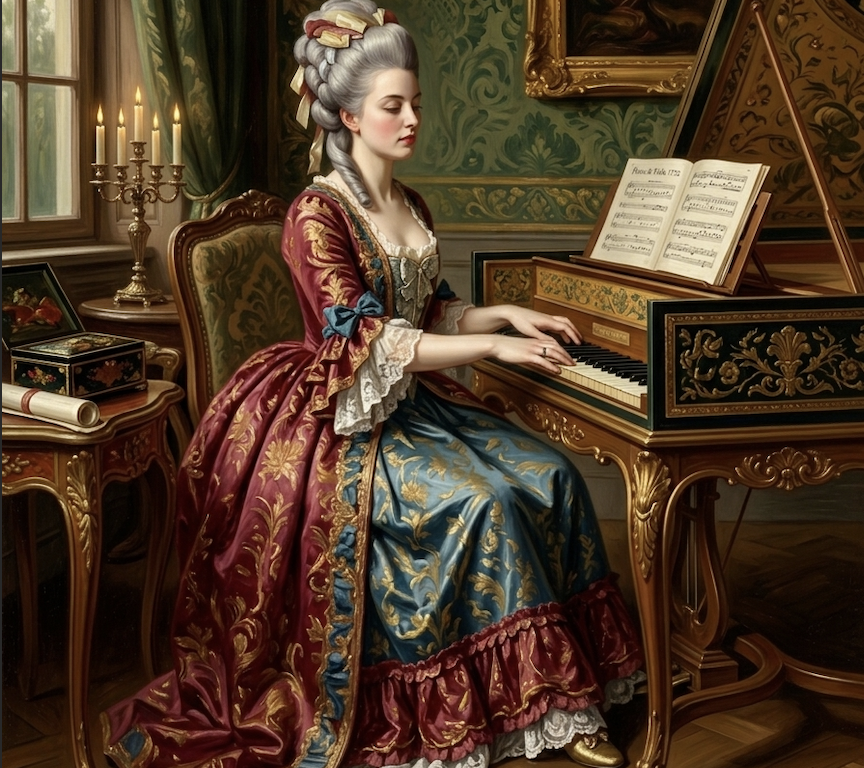
Rameau’s era was one of "Realized Harmony." Through the Basso Continuo, performers were expected to improvise complex accompaniments over a "fundamental bass." To Rameau, improvisation was not "making things up," but rather the spontaneous discovery of the natural laws of resonance.
- The Overtone Series: Rameau proved that every pitch contains its own natural harmony. The performer’s role was to be a "receptacle" for these overtones, realizing them in real-time.
III. THE INDIAN RAGA: A HOMAGE TO NATURE
The concept of music as a natural constant finds its purest expression in Indian Classical Music.
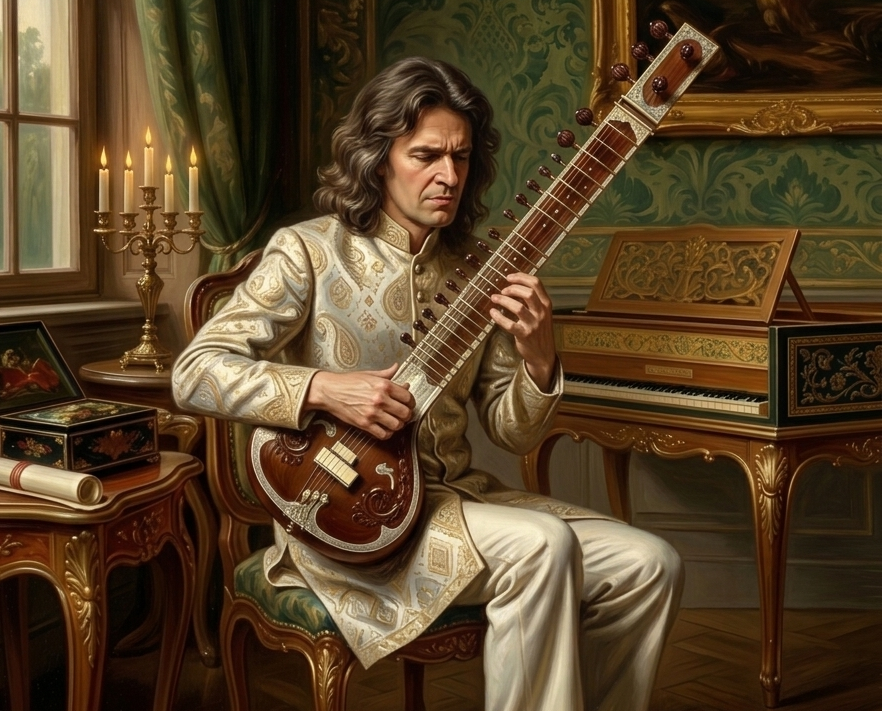
- The Raga System: Unlike Western scales, a Raga is a melodic framework based on specific ascending (Aroh) and descending (Avroh) patterns.
- 100% Improvisation: These ragas are entirely improvised as a spiritual homage to nature—reflecting specific times of day, seasons, or emotional landscapes. The musician does not "create" the Raga; they inhabit it.
IV. THE FUSION EVOLUTION: FROM MAHAVISHNU TO JOVIAN
The mid-20th century saw a massive convergence as Jazz greats sought the spiritual depth of the East.
- The Pioneers: John McLaughlin (Mahavishnu Orchestra), John Coltrane, Miles Davis, and Return to Forever bridged the gap between Western harmony and the improvisational freedom of the Sitar masters.
- The 21st Century: Modern Fusion, led by ensembles like the Jovian Fusion Band, has carried this torch into the present.
- Case Study: "Crossfade to Yesterday": In this composition from Visions of the Beyond, the band takes the 1890 classical theme of Erik Satie (Gnossienne No. 1) and transforms it. By improvising over a theme from the past, the band creates a temporal journey for the listener—bridging 1890 to 2021. This is the realization of sound from the past into a new universal frequency for future generations.
V. THE RECEPTACLE THEORY: THE CHOSEN EAR
I believe that music is a gift from Nature.
- The Special Receiver: Only select individuals possess the biological "ears" required to hear what is already in existence. Whether in 1722, 1890, or today, these special individuals are "receivers" who hear the music in their heads before it is ever played.
- Biological Integrity: Maintaining an elite biological state (low inflammation, high hormonal drive) ensures the "antenna" remains clear to receive these universal truths.
IV. THE GENETIC GHOST: INHERITANCE VS. NARRATIVE
While the credit for musical talent is often subject to "stolen narratives" and societal weaponization, the biological reality of the gift remains unassailable.
- Merit as DNA: Talent is an inherited resonance. Even if the narrative is suppressed or credited to another, the "Genetic Ghost" of the true source vibrates in the work produced.
Whether in 1722 or the modern era, the "Special and Chosen" remain the vital link between the infinite music of the universe and the human experience.
- While names and narratives may be stolen, the Biological Reality of the gift remains. The music we hear today is the same music Rameau heard; we are simply the current generation of chosen receptacles releasing it back into the universe.